


Otoplasty
Anticipated pain level : Minimal
Anaesthetic: Local or general for children
Duration of Surgery: 45 minuten
Scars: Virtually invisible, behind the ear
Final results: After 2 months
Social isolation: 7 dagen

Why?
Otoplasty enables sticking-out ears to be corrected.
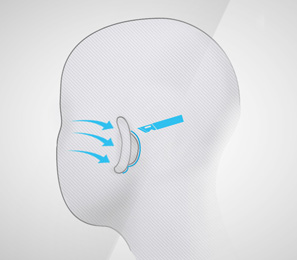
The Intervention
Performed under local anaesthesia, the otoplasty takes about two hours.
It consists of making an incision behind the pinna and correcting the shape of the cartilaginous skeleton. The surgeon remodels the cartilage and, if necessary, removes a fragment of it. Thus contracted, the corner of the ear is brought closer to the head. The surgeon sutures the incision and applies a bandage in order to keep the ear in its new position.

Results and Post-Operative Treatment
Immediately after the operation, the surgeon applies a bandage around the head. Ten days later, the stitches are removed and the bandage is taken off. For the next three weeks, it is recommended that you wear a solid strip or a bandage during the night.
Work can usually be resumed ten days after the treatment of the sticking-out ears.
Learn More About It
- Sticking-out ears are caused by a hereditary malformation of the cartilaginous structure of the ear, known as the pinna. There are three main types of protruding ears:
- Flat Pinna: The central fold of the ear, called the anthelia, is not well-formed, leading to a flat ear appearance. The correction involves reshaping the cartilage of the ear.
- Small, Round Ears: The edge of the ear, called the helix, is underdeveloped, resulting in a smaller, rounder shape. This is the most challenging type of protruding ear to correct.
- Overly Protruding Ears: The horn-shaped part of the ear is overly developed, making the ear stick out more. This type is often seen in combination with the other two types.
- Otoplasty is tailored to address the specific type of malformation and desired correction.
- In the weeks following the procedure, it is recommended to avoid strenuous physical activity or heavy lifting, as high blood pressure can increase the risk of secondary bleeding.
- After surgery, the ear may appear reddish, swollen, and tender, but these symptoms typically subside over time. As the incision is made behind the ear, any scarring is discreet and minimal.
- The final results of the surgery can be assessed about three months after the procedure.